0

Tomorrow I go Home

I have had one of the most eventful autumns of my life. The events have not been catastrophic or unexpected, they have simply been numerous. Most have been enjoyable but all have felt rushed. In the last five weeks, I have had only four days at home alone to catch my breath.

I have covered the eastern half of Canada from Sydney to Winnipeg, much of it driving, some of it flying (and wishing we had better/more frequent train service in this county) and all of it interesting.

I have seen a beautiful moose that courteously stayed on the side of the road rather than trying to cross it. He gave a call that I am going to assume was a love song because he had a romantic look in his eye. (Unfortunately, I was driving and couldn’t take a picture.) I have seen cruise ships come into the harbour–and the thousands of people who disembark to walk around the city. Their very presence changes the nature of the community they have come to see.

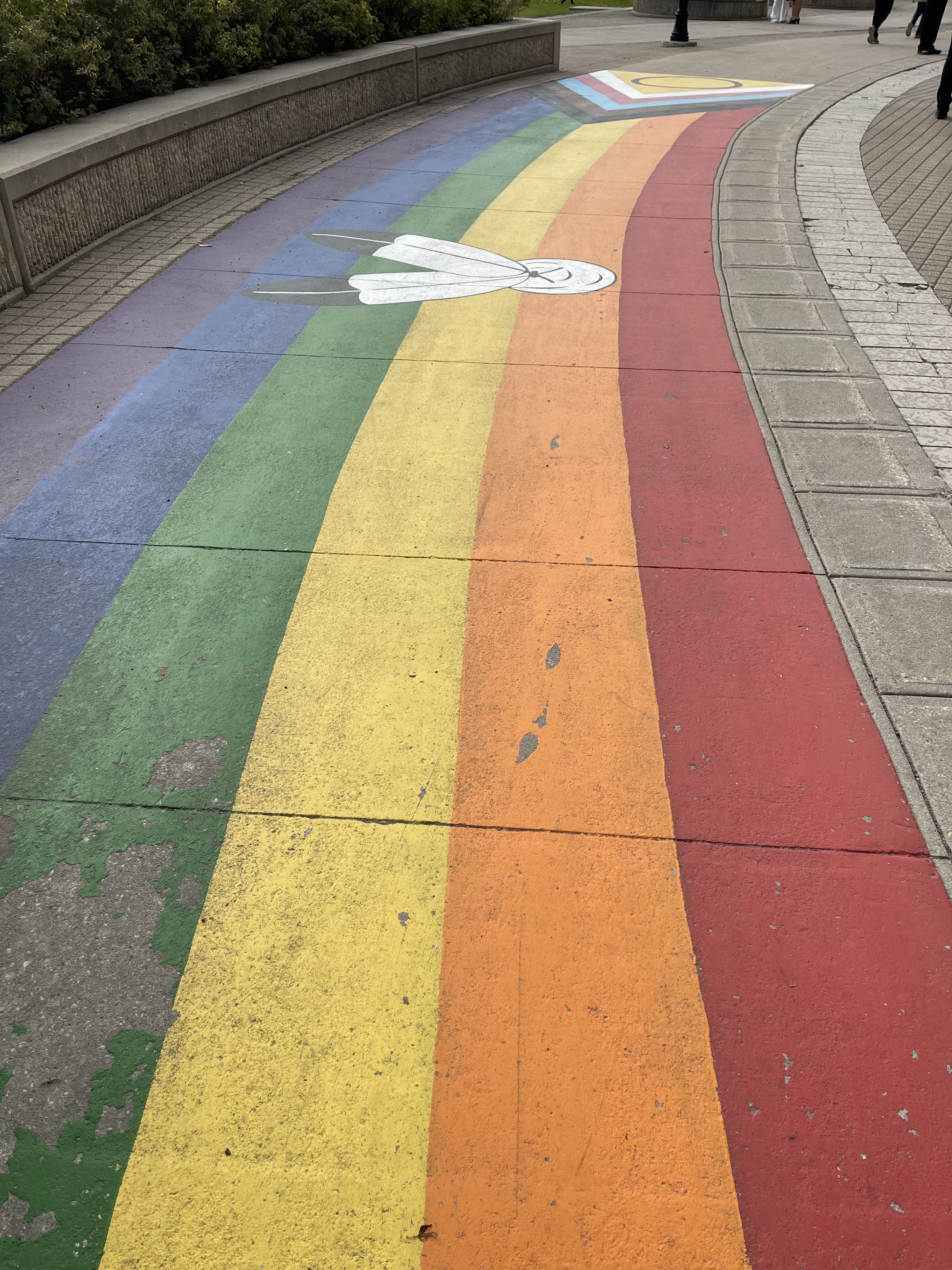
I’ve seen touching acts of kindness and cruel acts of bigotry.
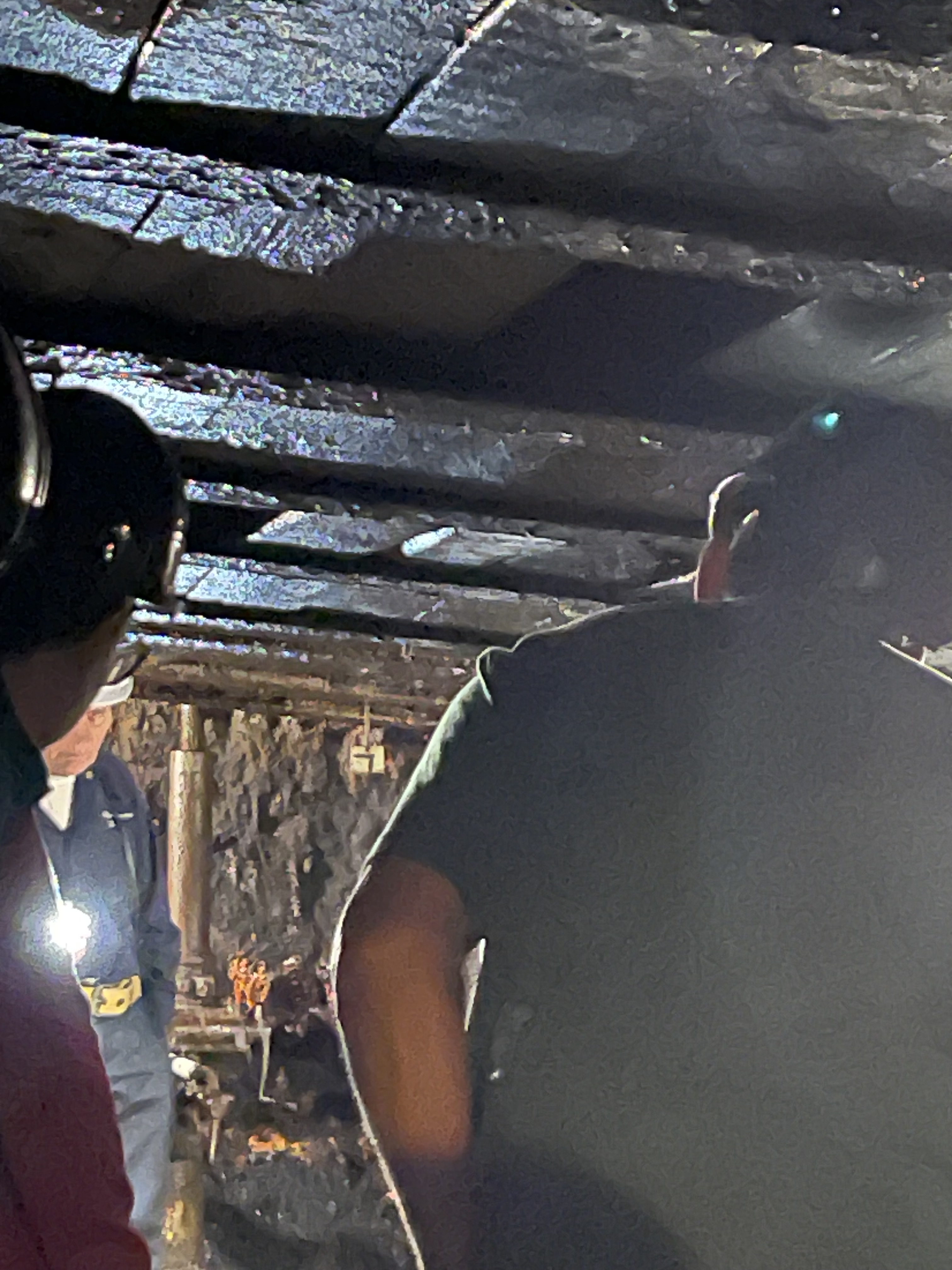
I have gone underground. I just went into a couple of chambers of the coal mine, but it was enough for me to be in awe of those who went down before the sunrise and came up after the sunset. It made me appreciative of all that has been done in this country by those who came before me to give me a life as comfortable as I have in this era.

I have seen the beauty of the changing colours the ebbing and rising tides, and the different geologies and geographies of this land. I have had local maple syrup from a variety of regions, lobster, scallops, perch, venison, chicken, bannock and bison, corn, wheat, apples, pears, squash, pumpkin, a variety of dairy, egg, and cheese products. I enjoyed several locally produced ales with my meals and my meals and snacks reminded me of the abundance of resources we have.

I have seen the homeless, the addicted, the afflicted, the ignored, the despised, the removed, and the ones who have lost all hope. It reminded me of how unwilling we appear to be to share our abundance, and I should probably count myself in the number of those who could share more than I do.

I have attended the baptism of a three-week-old infant and conversed with a 106-year-old man in a long-term care facility. I have attended a birthday, a graduation, a funeral, a dedication and visited a hospital. I have also worshipped in churches, outdoors, in a synagogue, and in a mosque. In each situation, I have found learning with joy and learning with concern.

I went to an agricultural fair and saw the wonder of what can be accomplished when humanity works with other speices. Determined faces struggled to accomplish the best possible results before showing their produce and animals, and there was pride on the part of some stock who showed off by plumping feathers, raising their heads, or simply striking a pose. I saw delight in the eyes of those for whom so much of this was new.

In an other area of the Fair there were screams of joy and fear. The midway held such excitement, and there were tears because one more ride wasn’t possible and the ice cream got dropped.

I have seen cities whose buildings blot out the sky and cities that blend with their surroundings. I’ve seen industrial hubs and transportation hubs. I have experienced kindness and generosity, as well as rudeness and contempt.

I have experienced sorrow and celebration, grief and gratitude. I have been to a graduation where I saw a myriad of diverse national “special occasion” clothing and I was amazed and awed. I was unable to approach people and ask permission to photograph, but I tingled at all the colours that were so enlivening and lent so much joy to the occasion. I have been amazed at what I have encountered, and I have been so thankful.

While all of this has been happening I have joked and said my body has begun to hate me. My eating habits, my sleeping habits, and my exercise habits keep changing, sometimes on a daily basis. I get bloated and dehydrated, go hungry and hurry when I do get to eat and sometimes overeat. Even this has been a time of reflection.

I thought of those whose routines are non-routines because of constant change and the need to leave unsafe places. They could be unsafe places because of natural occurrences, perhaps natural occurrences resulting from the way we have changed our climates. Or they could be unsafe places because of the bombs and artillery that humans tend to lob at one another, or unsafe places because of persecution for no reason other than being who one is.

These five very rushed, very eventful, very demanding weeks have been good for learning, experiencing and relating. But I will be glad to get back to my nice boring home life for the next several months. I am glad to have the freedom and ability to get back to my nice boring home life for the next several months.
1

Enjoyng Pilgrimage in a New Way

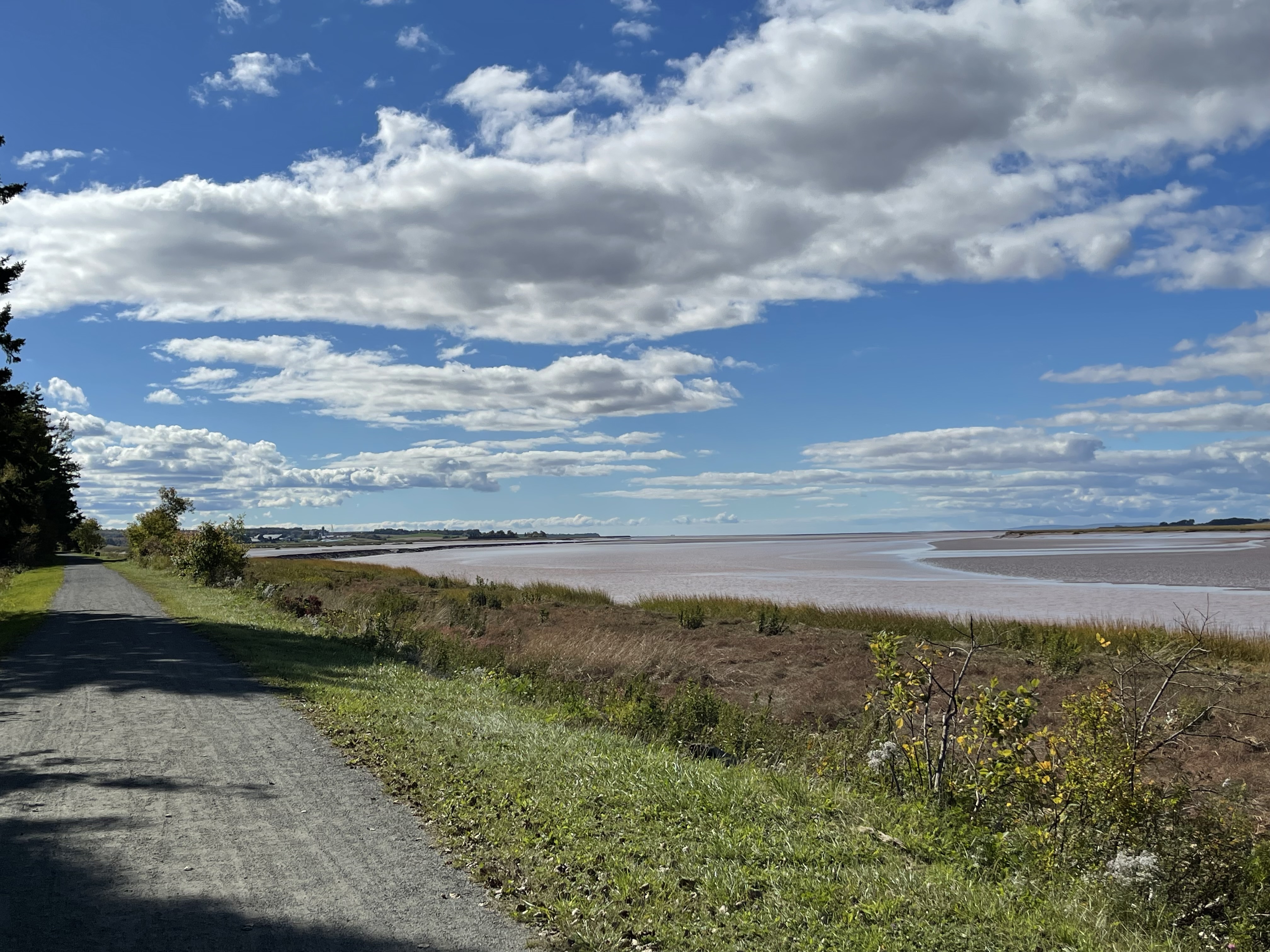
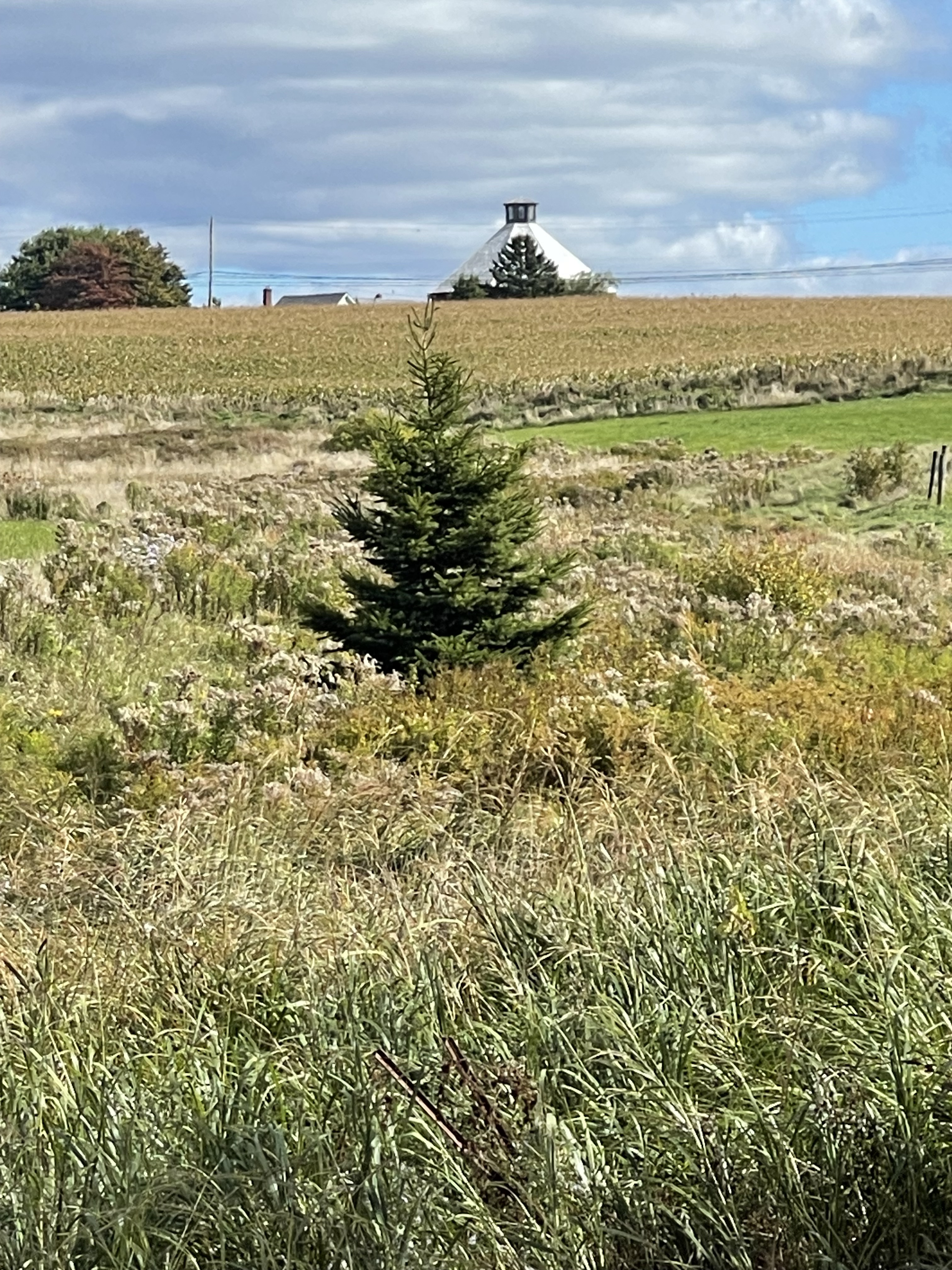
After Church, my cousin Heather and I went for a walk on the Cobequit Trail. We were on the Old Barns Section and walked almost as far as the Round Barn Lane. That’s about 5.5 km, my furthest consistent walk since my head injury. My last good trail walk was a year ago with another Heather, who is not my cousin.

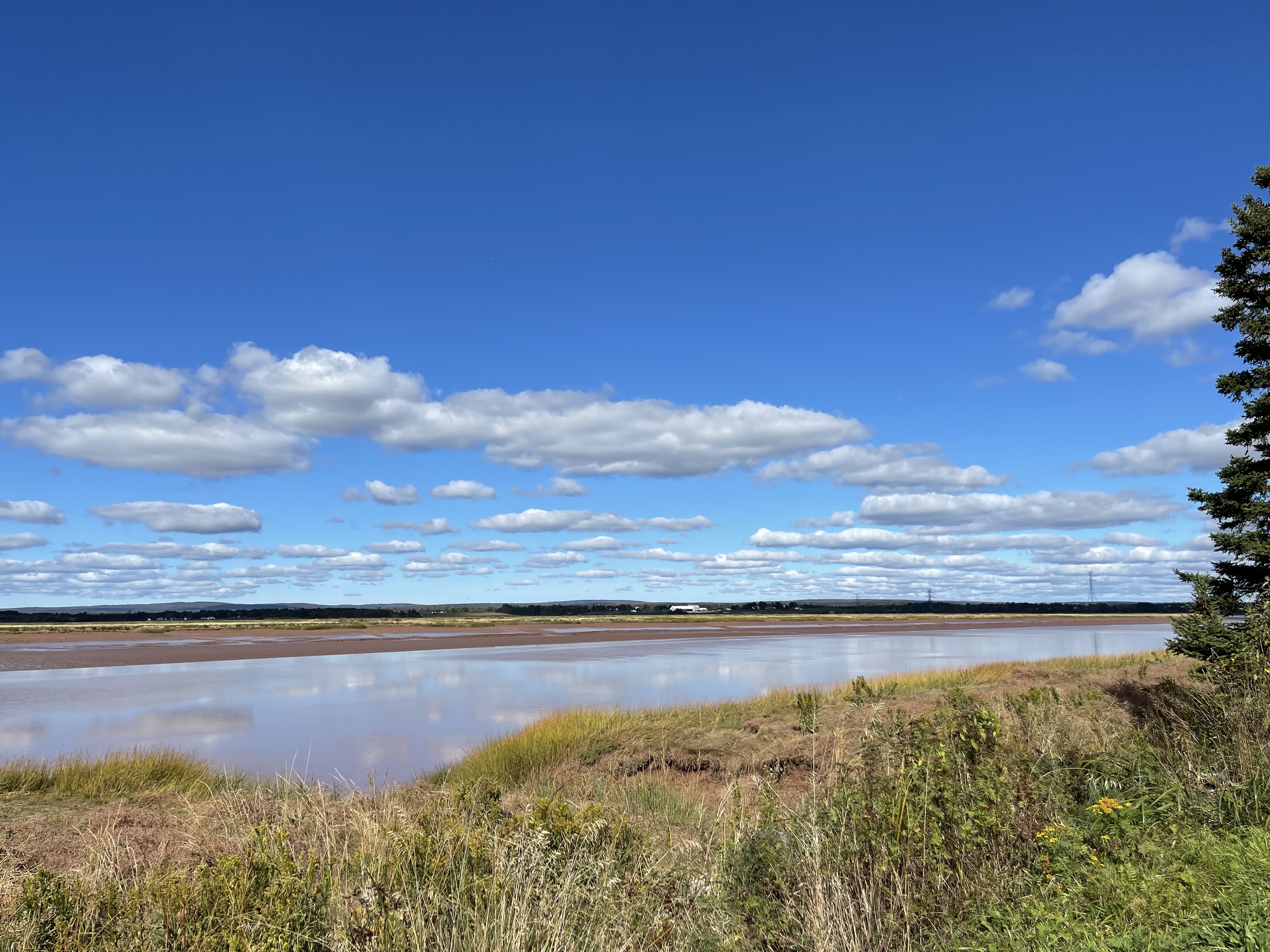
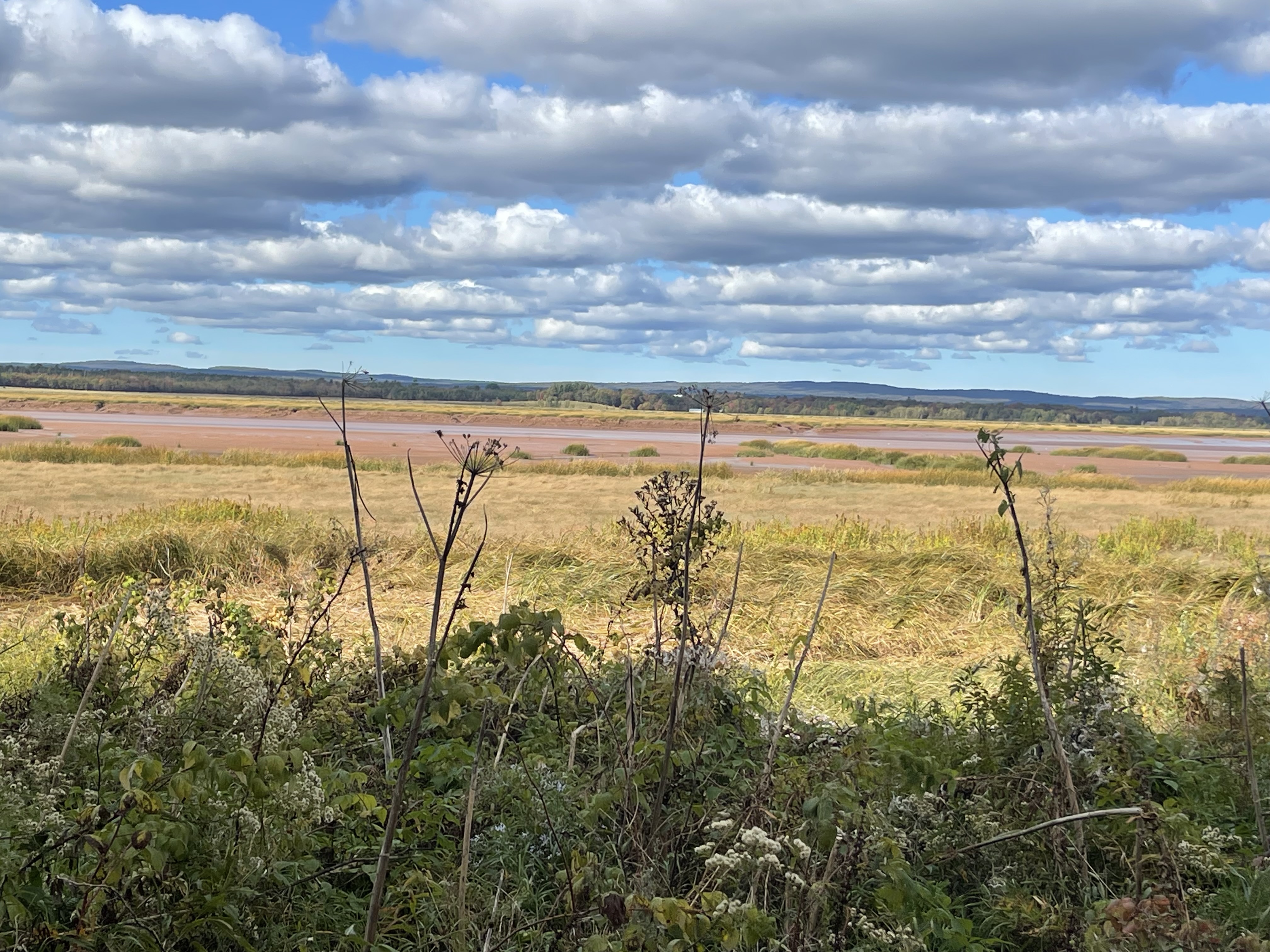
Perhaps it was the beauty of the area that made me not realize how far I was walking or all the unique features I was seeing because areas with tides are so much different than those places I go on the Great Lakes of Ontario. Whatever it was, we were almost at the end of our walk before I had even the slightest of balance issues.

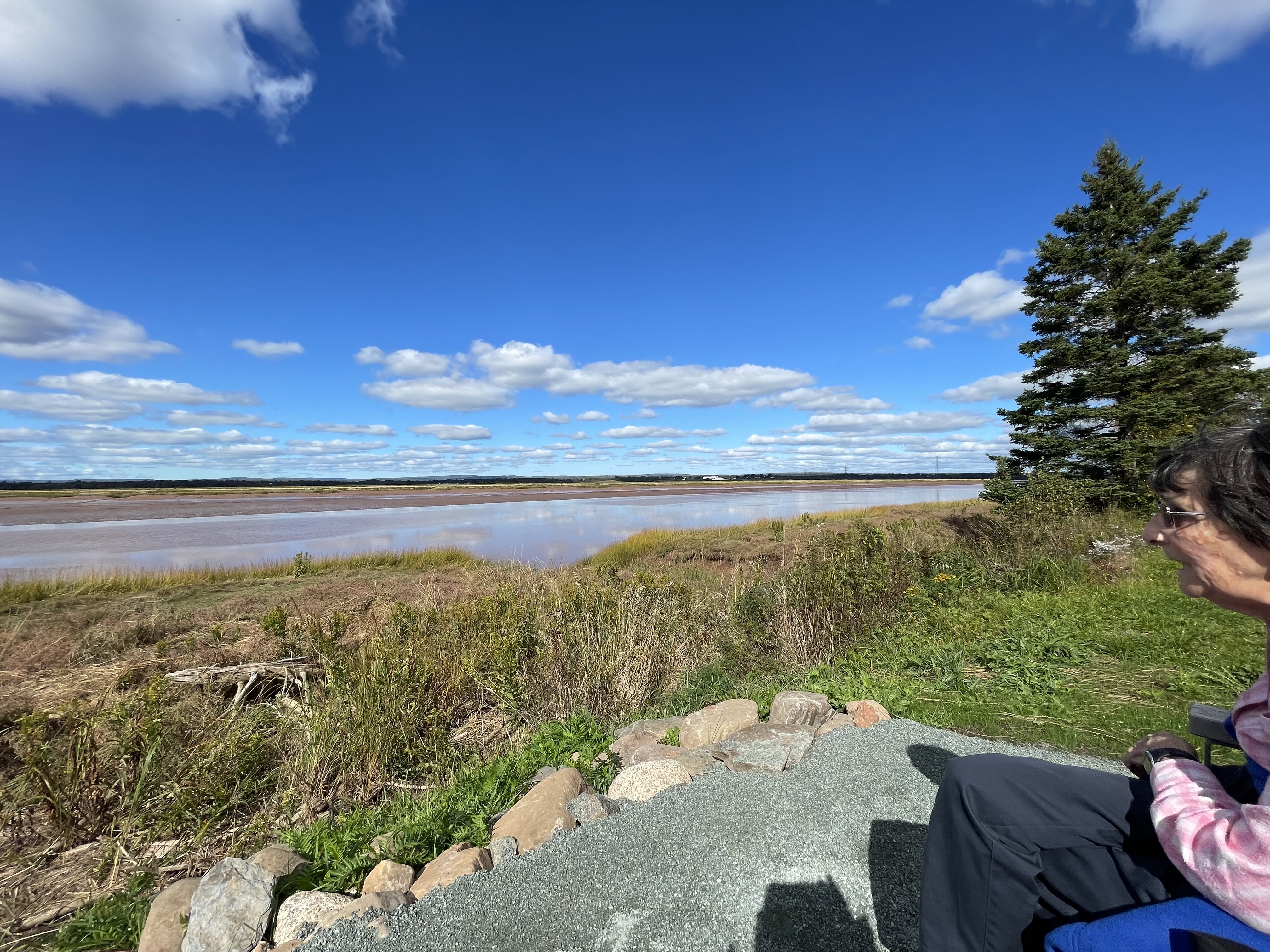
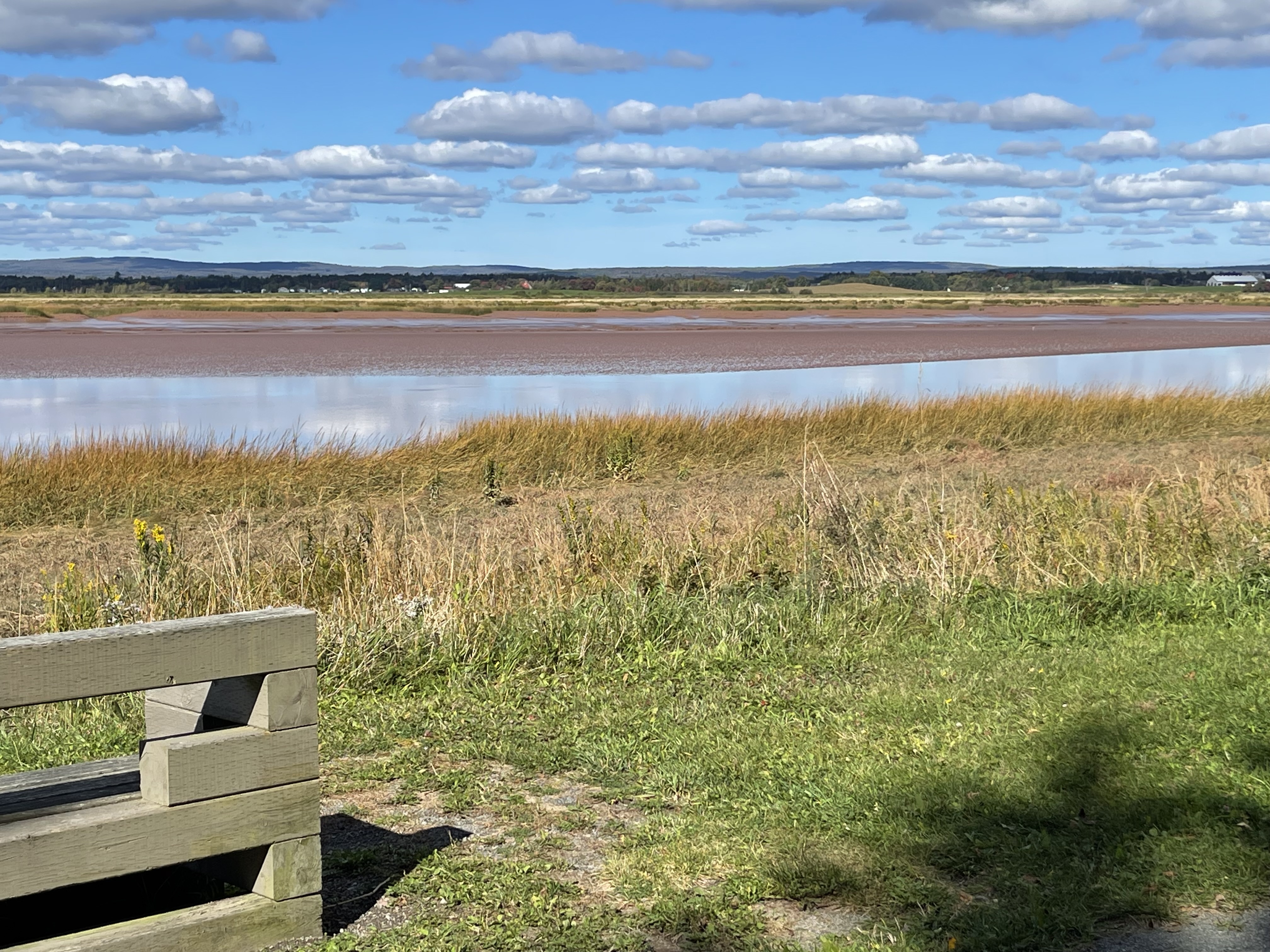
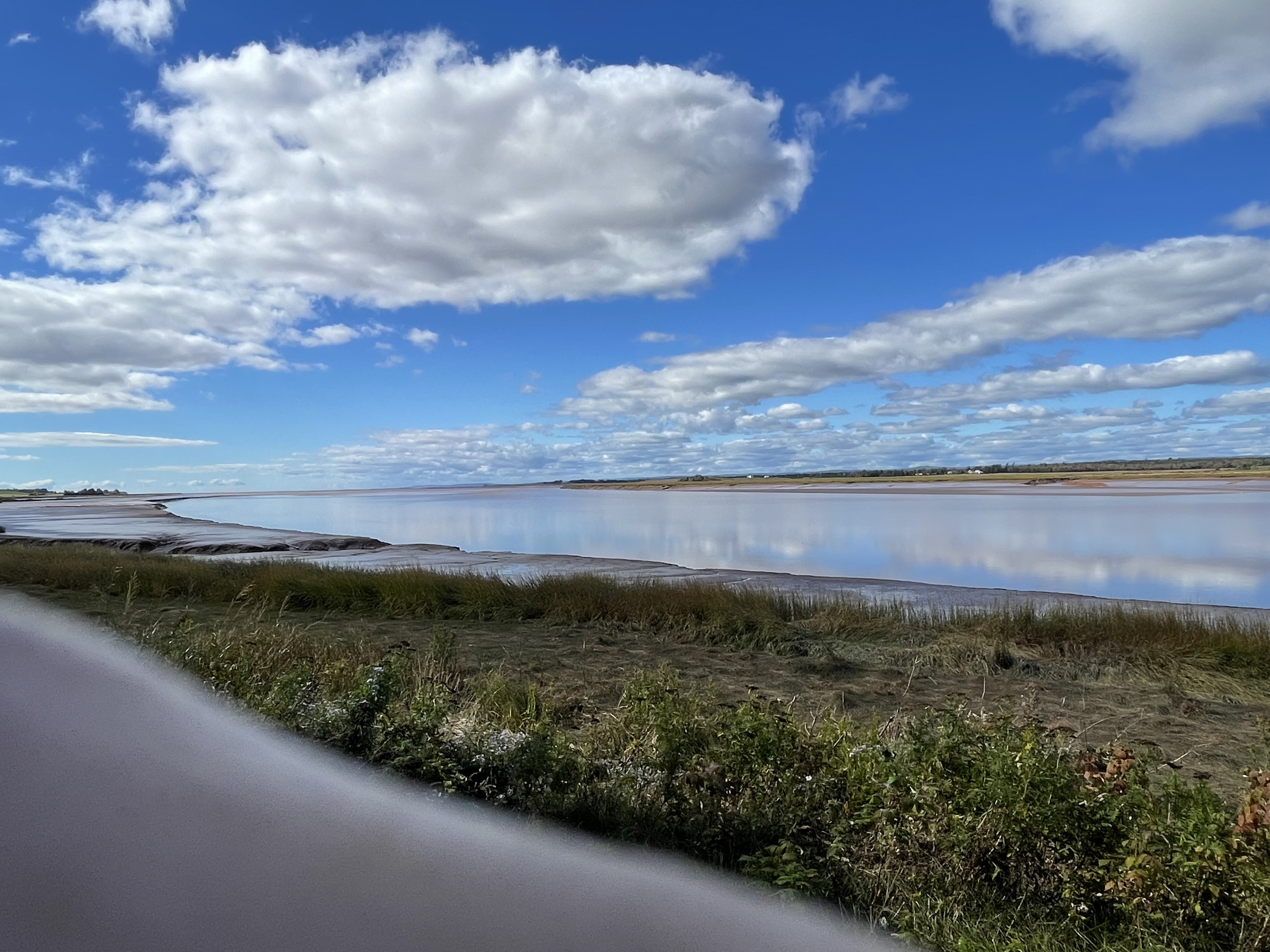
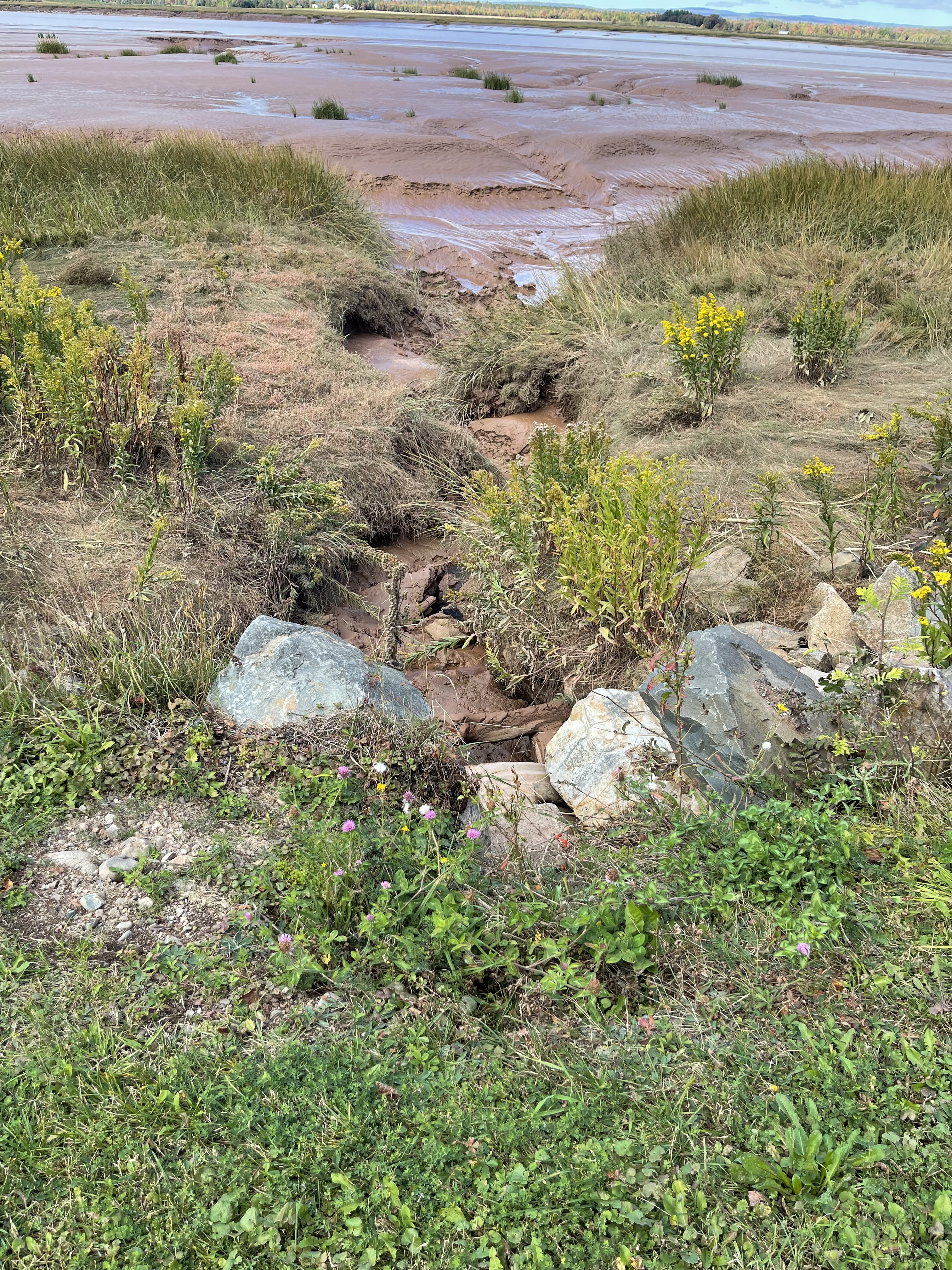
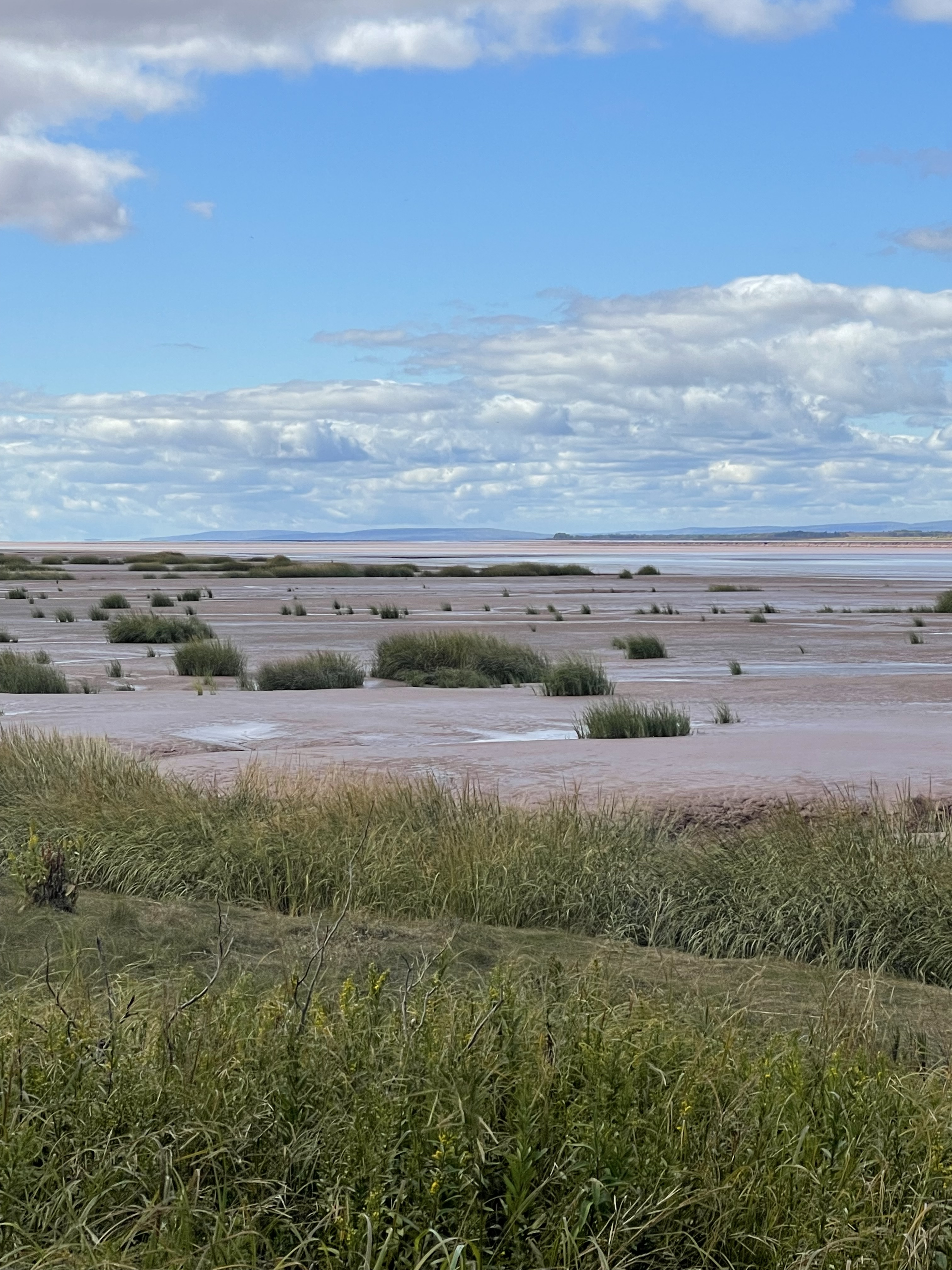
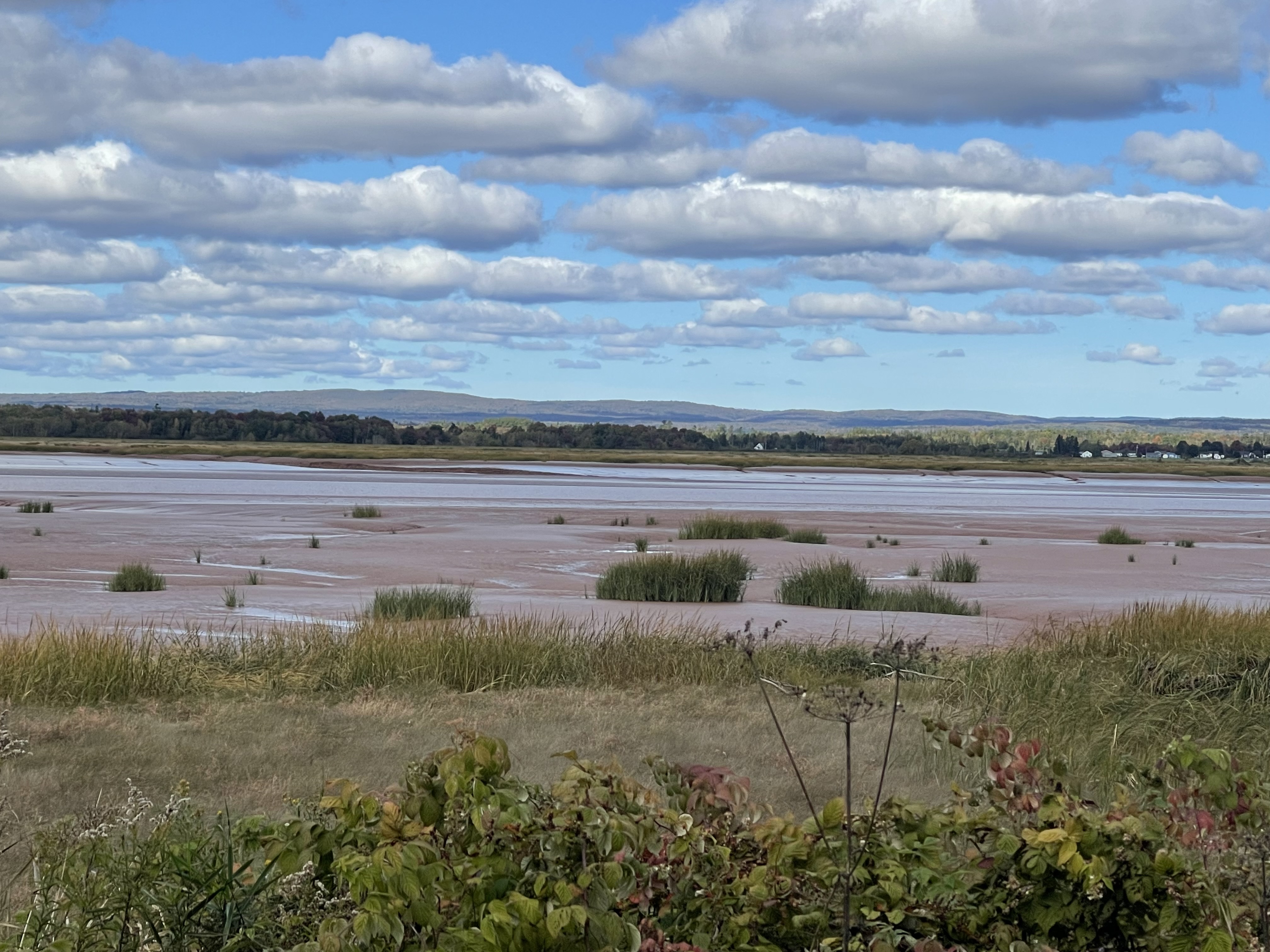
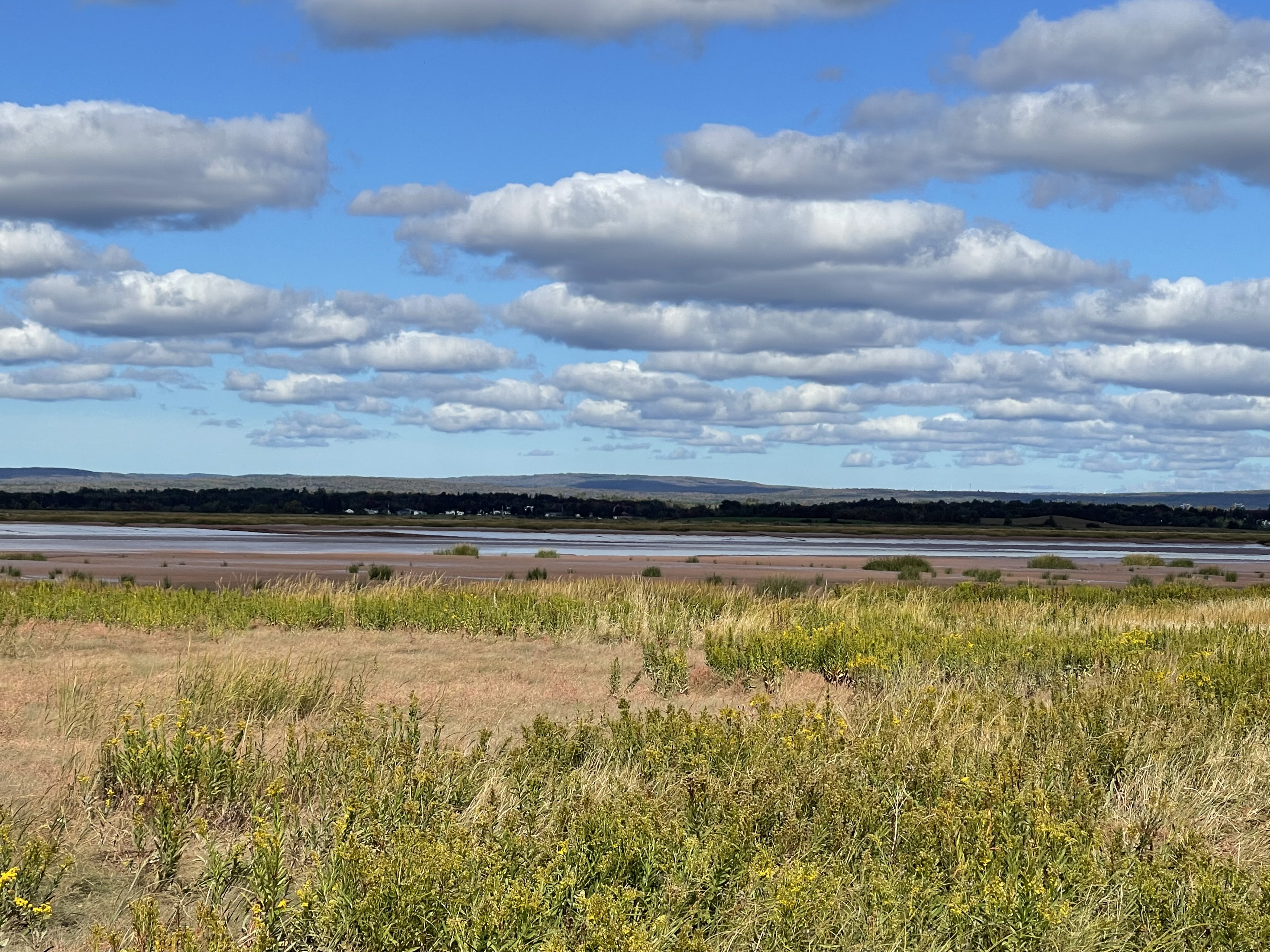
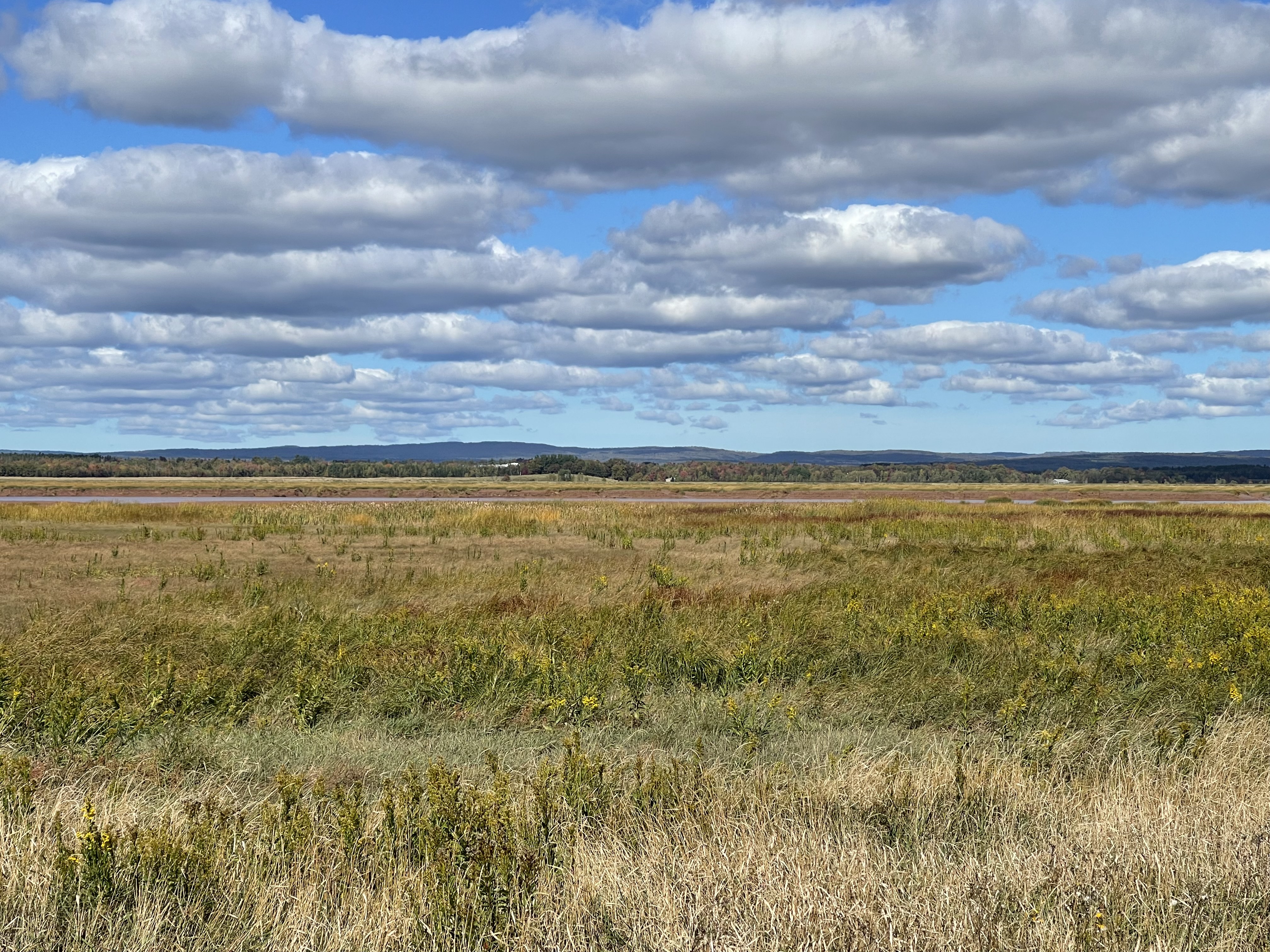
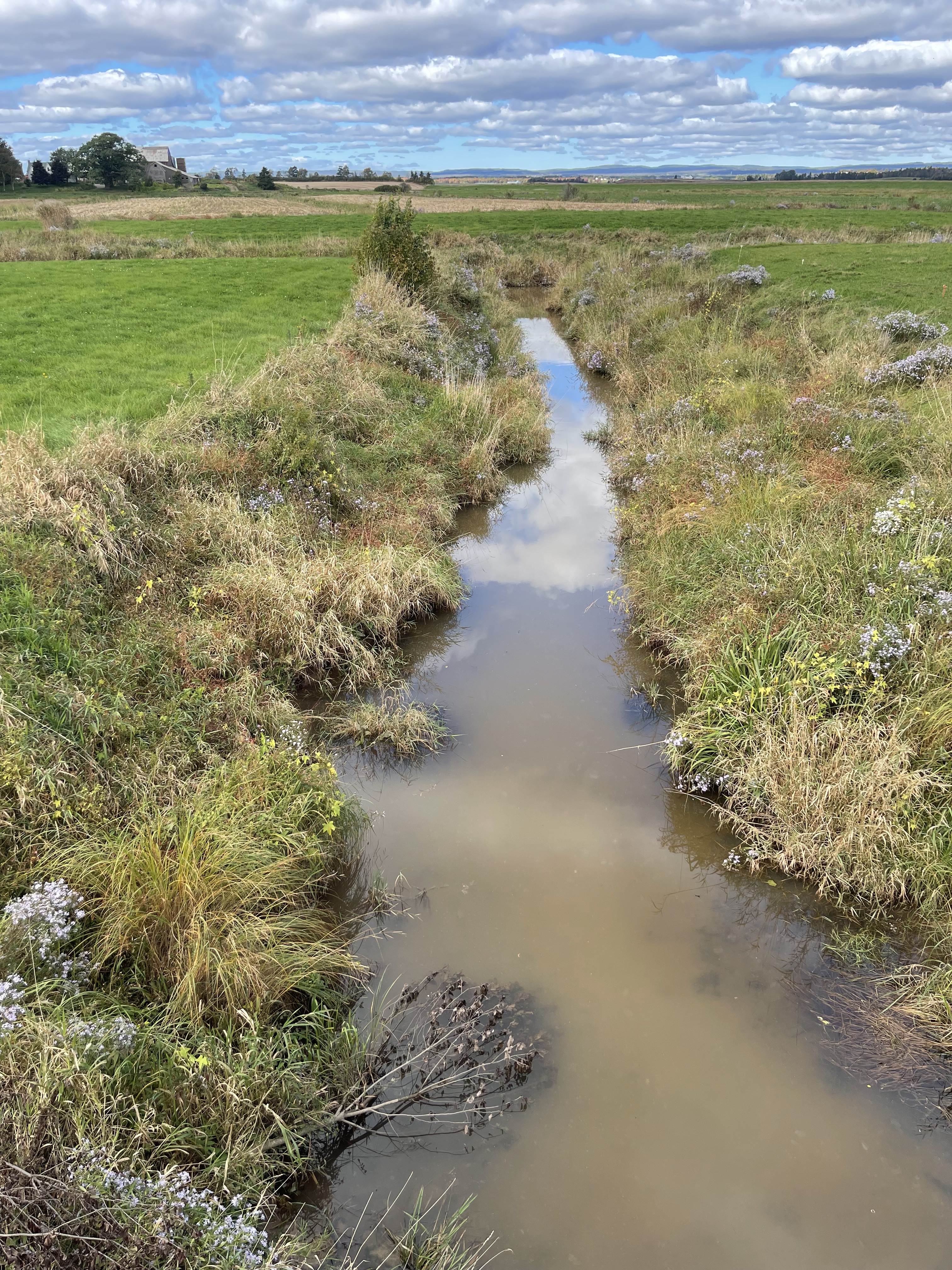
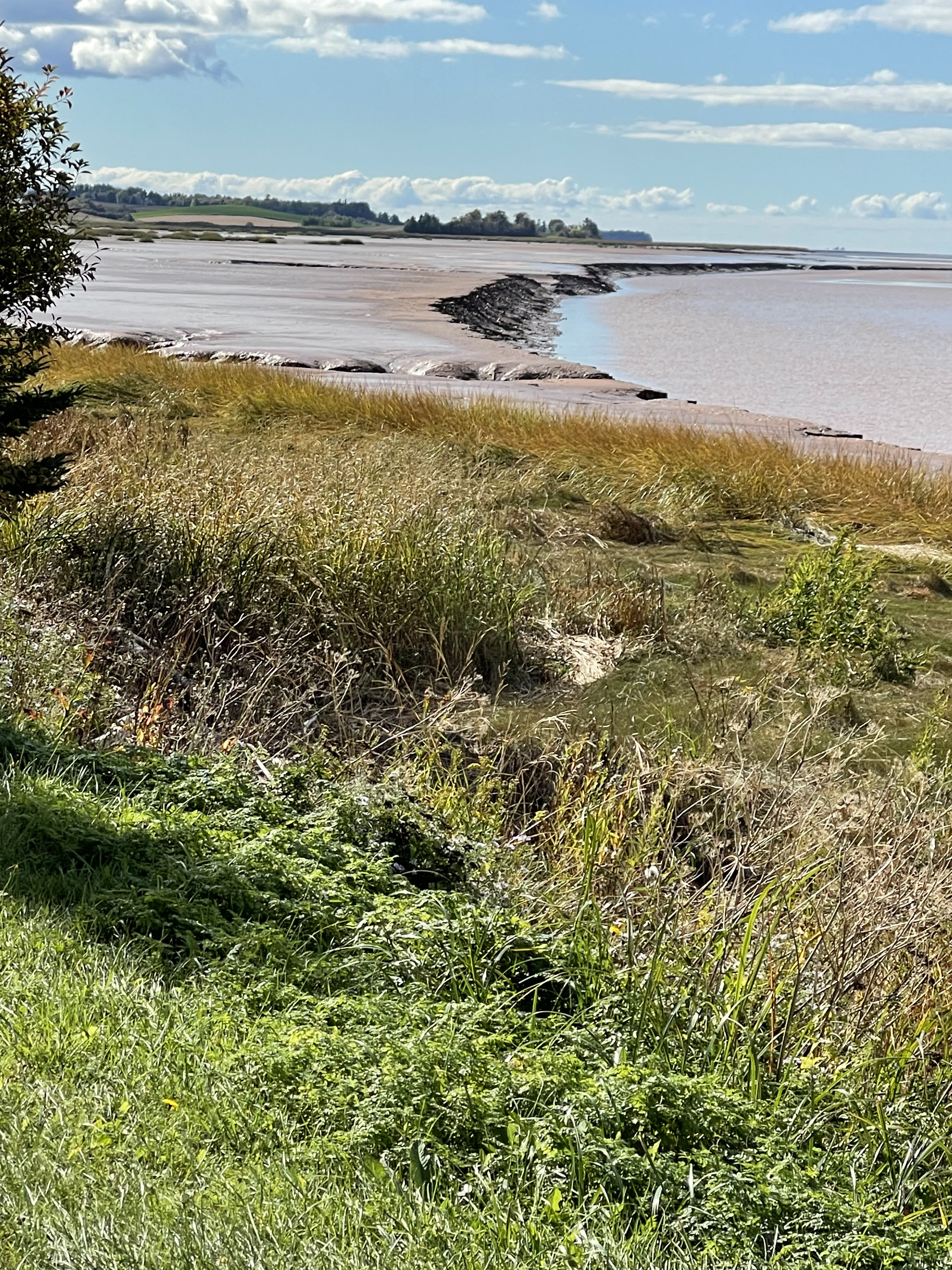
We walked and saw other walkers, cyclists, dogs, cows and the wonder of the tidal lands that are marshlands of the mud flats. There are grasses that can survive, if not thrive, on salt water, and they are encroaching on the mudflat areas

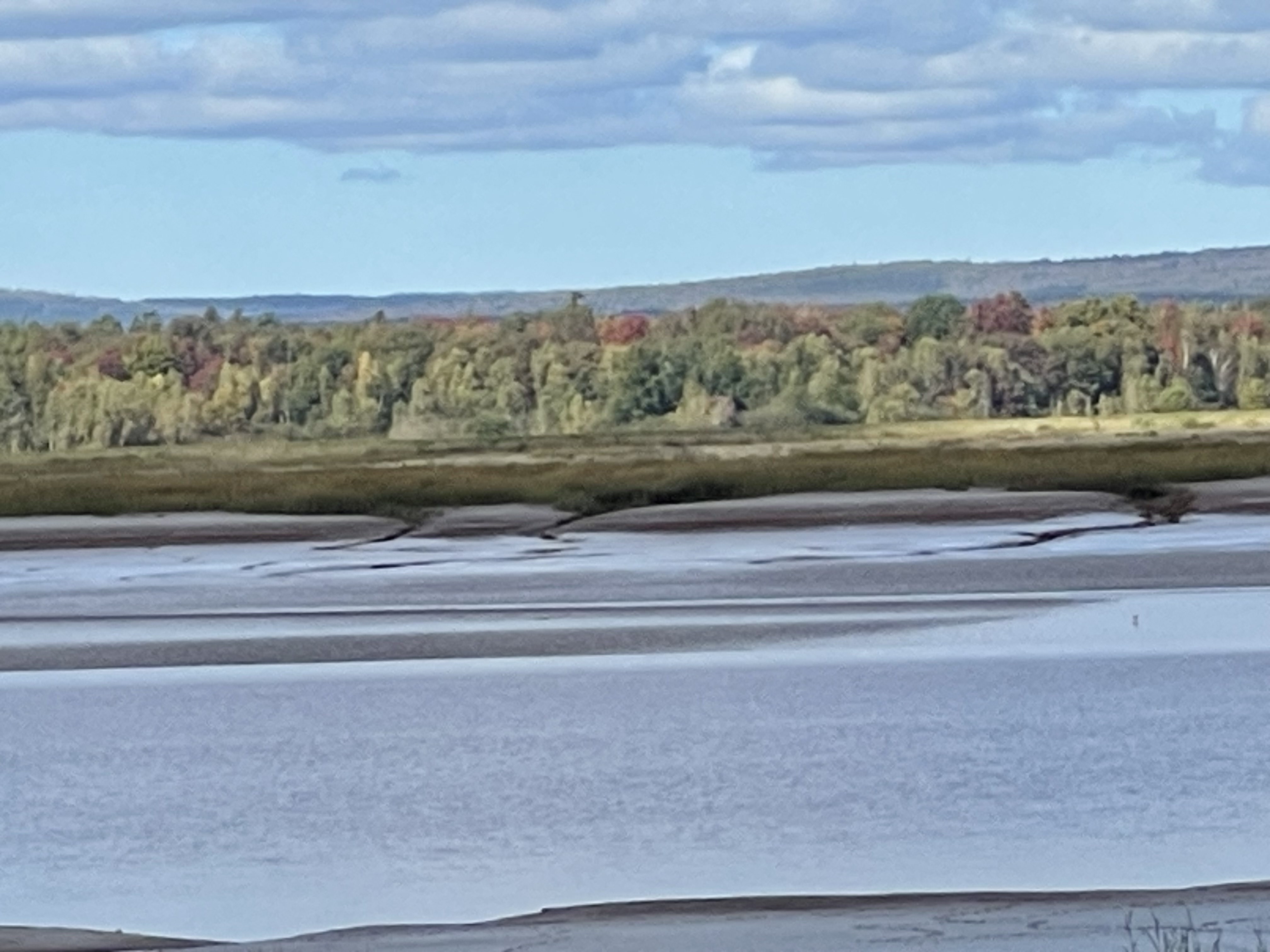
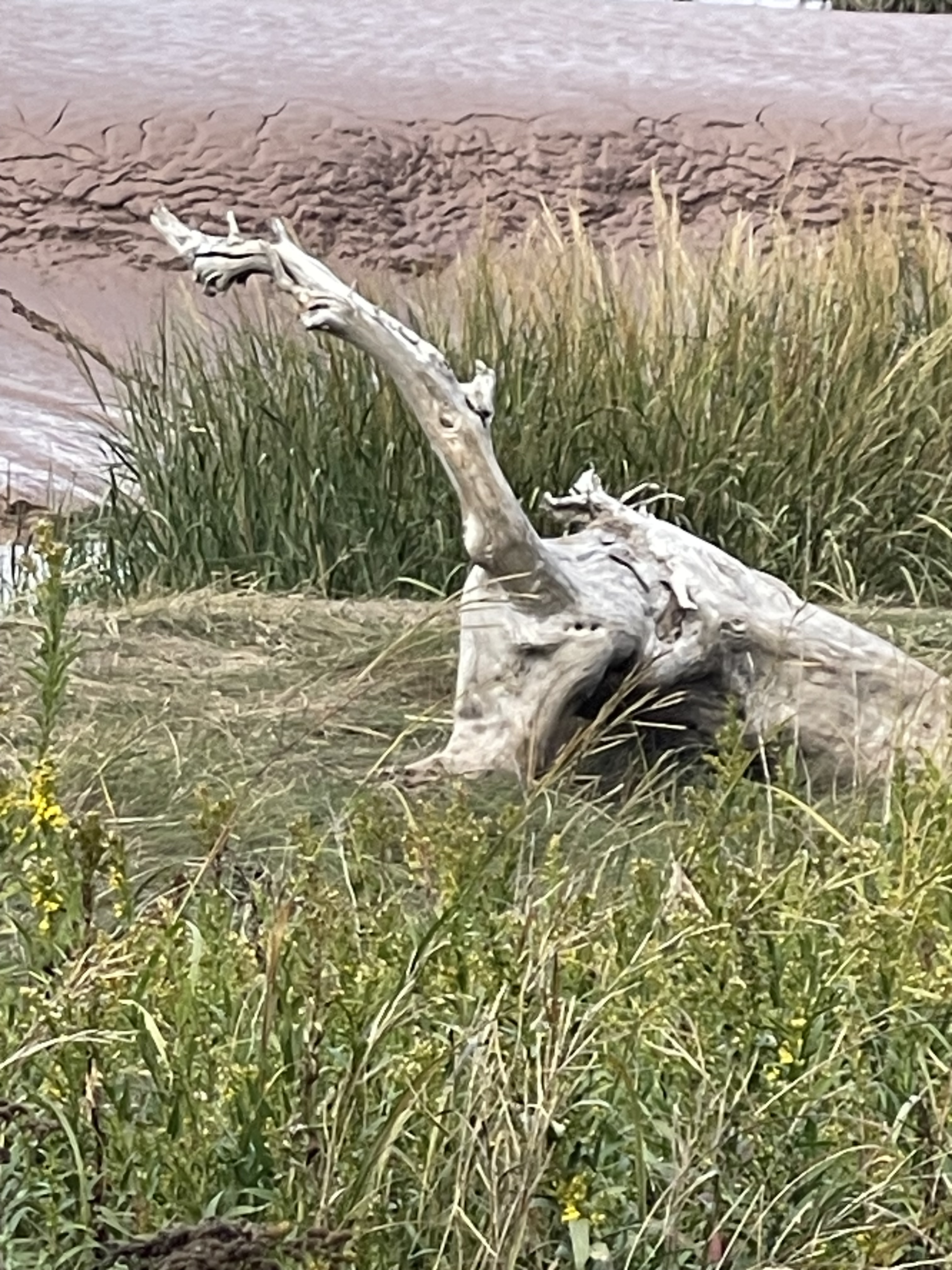
There were many plants that are quite different than those to which I am accustomed, including one that looked like an innocent Queen Anne’s Lace but was as toxic as Poison Ivy. It is given the romantic name of Cow Parsnip. There were interesting cuts in the mud that disappear during high tide and, swaths of green trees with sudden bursts of colour in them. And of course, there were also the persistent seagulls.

While walking along I thought of my friends Matthew and Sarah and was telling Heather about Matthew’s recent St. Ninian Walk. I told Heather that when I saw Matthew in the hospital, he and I had talked about Little Doc, Hugh MacPherson. We had each done research on Little Doc, he for his pilgrimage, and I for completely different reasons and we had learned different things about him. I told her how there is so much he is able to see when he is making his pilgrimages, because, for him, walks are pilgrimages. I told her that I try to think of walks in a similar way. For me, today’s walk did seem like a pilgrimage of recovery, and I rejoice.

As Heather and I walked there were quiet places, and there were thin places, and there was wonder. We were only out by the mudflats for only about ninety minutes–but it was enough for nature to have changed her appearance between our walk out and our walk back. It was a good day–and I am very grateful to my cousin.

0

Classism is an ‘ism’ that’s still very acceptable

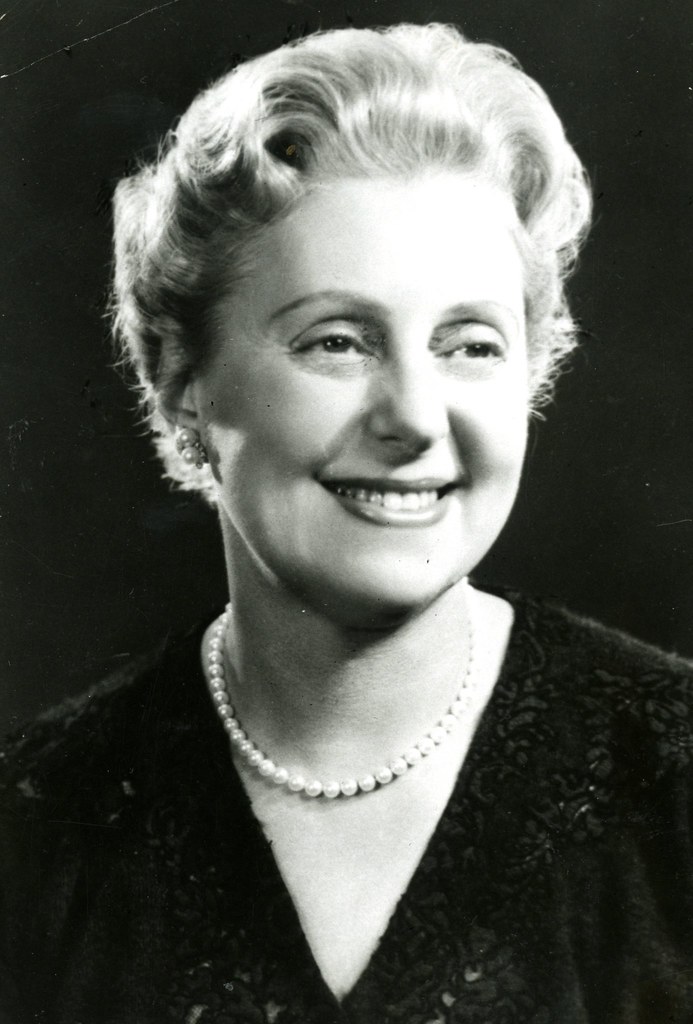
If the name Nina Cohen rings a bell, I’m not surprised. She was the National President of Canadian Hadasah-WIZO in the 1960s. However, in the community of Glace Bay, Cape Breton she is remembered for many more important, local supportive activities than that. She was responsible for both the creation of the Men of the Deeps and the Cape Breton Miners Museum.

I think it’s important to know — the museum does not receive any government funding as part of the “Nova Scotia Museum: The Family of Provincial Museums.” I just learned this. I don’t know why it’s not included with the others, and I hope I can find out more information than the media release given by the office of the Nova Scotia Heritage Minister. While I search, the cynical but very realistic part of my brain thinks it’s because it’s a museum about working-class history. Its exhibits and tours do talk about various elements of the coal industry, such as the geology, but the display is from the miners’ perspective. It gives information that is difficult to find in other museums. From a miners’ perspective, the owners do not fare too well, and the governments (regardless of party at the time) fare even worse. As someone who is currently researching religion in labour activities, I am sad to say that religious organizations don’t fare too well either.

I hope that the United Mine Workers of America-Canada and the Canadian Labour Congress give it some funding but I am not sure if they are aware of the current situation. This museum tells one of the most important stories of worker history and labour struggles in Eastern Canada if not in Canada as a whole. It is a story that affected the entire nation and parts of the nation at different times. During both World Wars, the story went beyond national borders and had global implications.

Of course, as a society we are still classist, and we often think worker history is unimportant to explain any sense of achievement, so why should it be funded? We want to know about the decision-makers and the famous. (Yes, that’s the cynical, but realistic side of my brain again.) We include almost none of working-class history in our school curriculae, except a brief mention of the Winnipeg General Strike, and even that usually focuses only on the leaders. It is no wonder that we can easily turn away from the worldwide abuses of child workers, and unsafe working conditions when when we don’t seem to care about workers, in general.

This museum is important not only to the history of Cape Breton miners in particular but also to miners throughout North America and to a myriad of working-class people. Although the context is different in different places, the struggle for recognition of the work, the workers’ humanity, and the workers’ contribution to the economy and society is common. The last mine here was closed in 2001. The number of old miners is decreasing, and the story will soon be lost without the museum, for the sake of a “more balanced” perspective elsewhere. Who gets to assess the balance? The blindfolded lady justice comes to my mind.

Today, I decided I’d worship in St. Paul’s Presbyterian Church, Glace Bay. It keeps popping up in much of my research and I thought it would be good to visit. The greeting and worship created a warm, caring and thought-provoking experience. The first thing to which I was directed when I entered the building was a petition to the Nova Scotia government to give an appropriate level of funding to the Miners Museum. As a non-resident, my signature would be meaningless, but I said I believed in the museum and I had made a small donation while I was there, and would help in any way I could. I am also happy to say that both their MLA, John White, and their current Regional Councillor, Ken Tracey (there is currently a municipal election underway) support the request for government funding. I would hope the federal government would also give funding, because this is not “just a regional story.” Historically, our federal government made many decisions that affected what happened in this area.

So why did I start off by mentioning Nina Cohen? She was never a miner. She never went underground, at least not before the museum was built. I mentioned her because Nina Cohen knew it was the miners who built Glace Bay, Reserve Mines, Dominion, and much of Cape Breton. She knew it was the workers who toiled, sweat, bled, waded in water up to their calves, crawled on their bellies in crevices barely three feet high to pick, shovel and blast coal, and died from black lung, methane, fireballs, explosions and mine collapses; who with their families, who worked just as hard to live on the wages that were paid, and with the coal that was always in the air who created the community. This daughter of a peddler turned shop-keeper who obtained her Ph.D. knew the importance of the Miner to the community–and in Canada’s Centennial year, led the drive to commemorate this fact by spearheading the museum build so the story wouldn’t be lost or forgotten. Until now, this has been one of the very few museums that has told the story of the workers and not the process or the product. The uniqueness of this museum is what makes its story important to the history of Canada.

While there are still the “old miners” who volunteer their time by sharing their stories and leading tours at the museum, it cannot continue forever. The various levels of government should remember that workers’ history, working-class history is valuable history, not just to the people of Glace Bay, Cape Breton but also to the woman writing this, who lives halfway across the country in Ontario–and to a number of other people between here and there.