
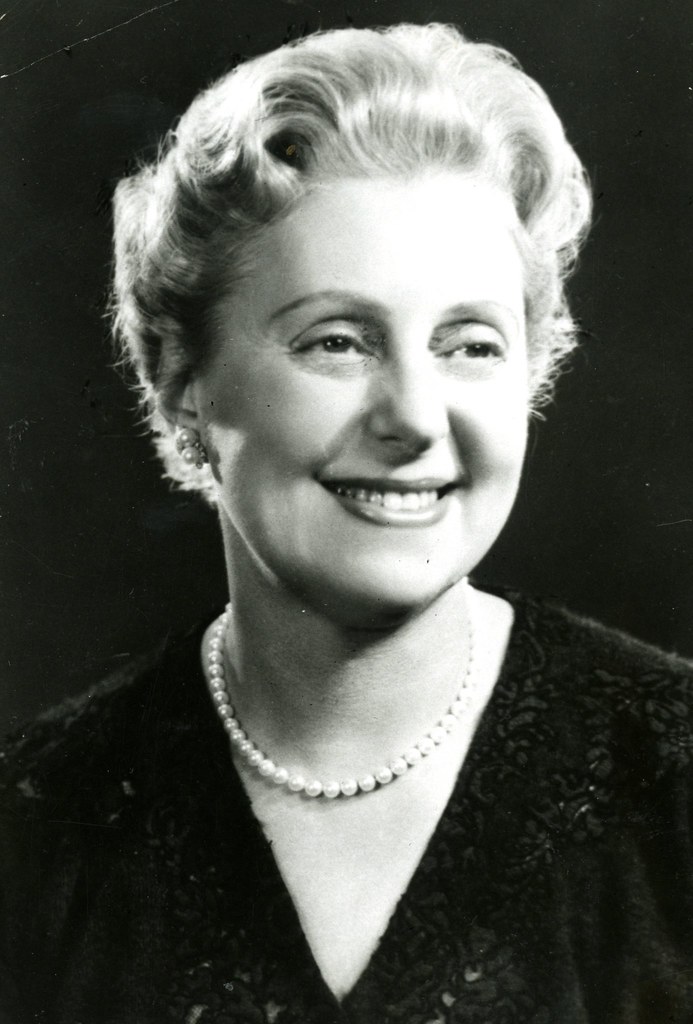
If the name Nina Cohen rings a bell, I’m not surprised. She was the National President of Canadian Hadasah-WIZO in the 1960s. However, in the community of Glace Bay, Cape Breton she is remembered for many more important, local supportive activities than that. She was responsible for both the creation of the Men of the Deeps and the Cape Breton Miners Museum.
I think it’s important to know — the museum does not receive any government funding as part of the “Nova Scotia Museum: The Family of Provincial Museums.” I just learned this. I don’t know why it’s not included with the others, and I hope I can find out more information than the media release given by the office of the Nova Scotia Heritage Minister. While I search, the cynical but very realistic part of my brain thinks it’s because it’s a museum about working-class history. Its exhibits and tours do talk about various elements of the coal industry, such as the geology, but the display is from the miners’ perspective. It gives information that is difficult to find in other museums. From a miners’ perspective, the owners do not fare too well, and the governments (regardless of party at the time) fare even worse. As someone who is currently researching religion in labour activities, I am sad to say that religious organizations don’t fare too well either.
I hope that the United Mine Workers of America-Canada and the Canadian Labour Congress give it some funding but I am not sure if they are aware of the current situation. This museum tells one of the most important stories of worker history and labour struggles in Eastern Canada if not in Canada as a whole. It is a story that affected the entire nation and parts of the nation at different times. During both World Wars, the story went beyond national borders and had global implications.
Of course, as a society we are still classist, and we often think worker history is unimportant to explain any sense of achievement, so why should it be funded? We want to know about the decision-makers and the famous. (Yes, that’s the cynical, but realistic side of my brain again.) We include almost none of working-class history in our school curriculae, except a brief mention of the Winnipeg General Strike, and even that usually focuses only on the leaders. It is no wonder that we can easily turn away from the worldwide abuses of child workers, and unsafe working conditions when when we don’t seem to care about workers, in general.
This museum is important not only to the history of Cape Breton miners in particular but also to miners throughout North America and to a myriad of working-class people. Although the context is different in different places, the struggle for recognition of the work, the workers’ humanity, and the workers’ contribution to the economy and society is common. The last mine here was closed in 2001. The number of old miners is decreasing, and the story will soon be lost without the museum, for the sake of a “more balanced” perspective elsewhere. Who gets to assess the balance? The blindfolded lady justice comes to my mind.
Today, I decided I’d worship in St. Paul’s Presbyterian Church, Glace Bay. It keeps popping up in much of my research and I thought it would be good to visit. The greeting and worship created a warm, caring and thought-provoking experience. The first thing to which I was directed when I entered the building was a petition to the Nova Scotia government to give an appropriate level of funding to the Miners Museum. As a non-resident, my signature would be meaningless, but I said I believed in the museum and I had made a small donation while I was there, and would help in any way I could. I am also happy to say that both their MLA, John White, and their current Regional Councillor, Ken Tracey (there is currently a municipal election underway) support the request for government funding. I would hope the federal government would also give funding, because this is not “just a regional story.” Historically, our federal government made many decisions that affected what happened in this area.
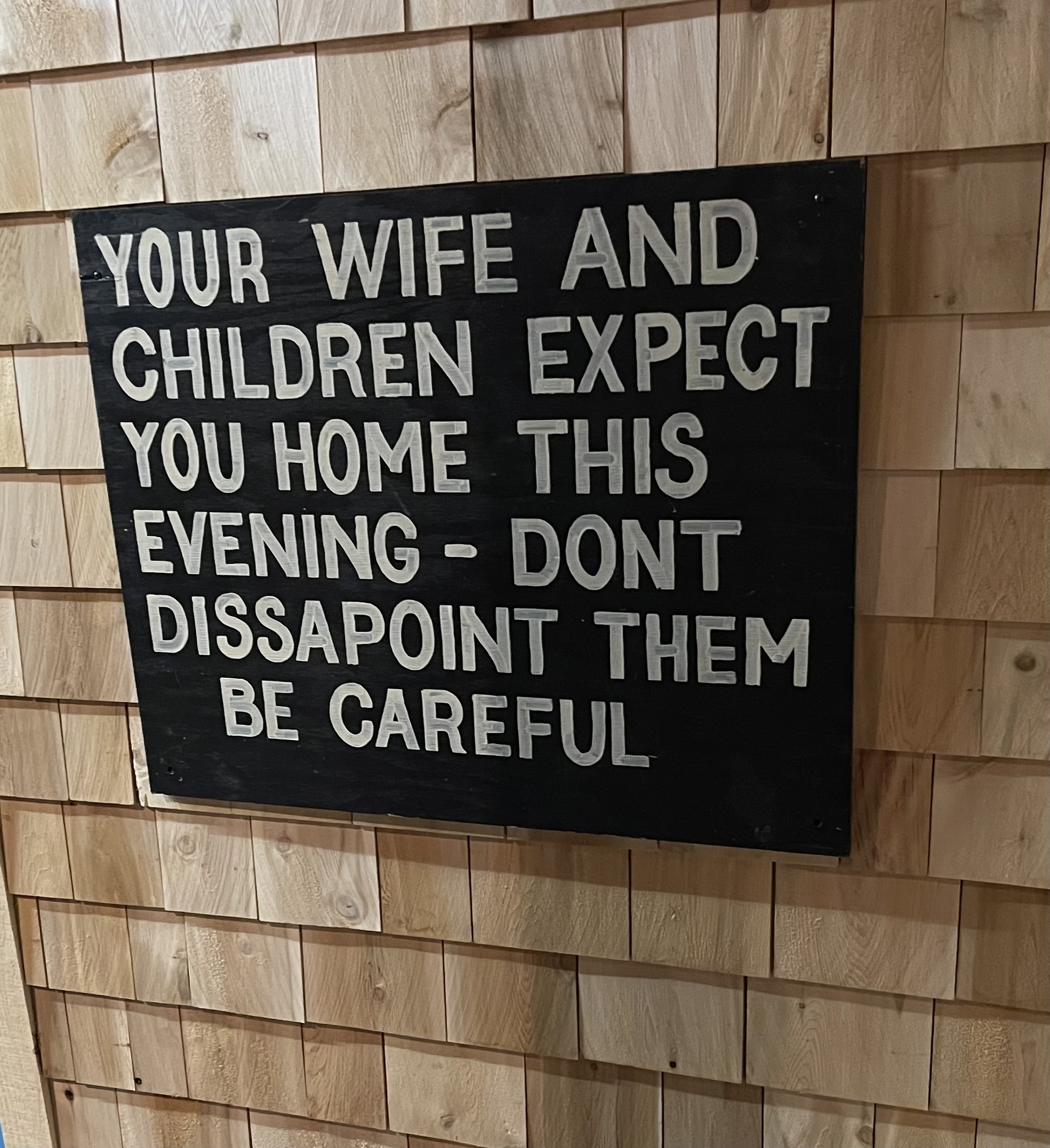
So why did I start off by mentioning Nina Cohen? She was never a miner. She never went underground, at least not before the museum was built. I mentioned her because Nina Cohen knew it was the miners who built Glace Bay, Reserve Mines, Dominion, and much of Cape Breton. She knew it was the workers who toiled, sweat, bled, waded in water up to their calves, crawled on their bellies in crevices barely three feet high to pick, shovel and blast coal, and died from black lung, methane, fireballs, explosions and mine collapses; who with their families, who worked just as hard to live on the wages that were paid, and with the coal that was always in the air who created the community. This daughter of a peddler turned shop-keeper who obtained her Ph.D. knew the importance of the Miner to the community–and in Canada’s Centennial year, led the drive to commemorate this fact by spearheading the museum build so the story wouldn’t be lost or forgotten. Until now, this has been one of the very few museums that has told the story of the workers and not the process or the product. The uniqueness of this museum is what makes its story important to the history of Canada.
While there are still the “old miners” who volunteer their time by sharing their stories and leading tours at the museum, it cannot continue forever. The various levels of government should remember that workers’ history, working-class history is valuable history, not just to the people of Glace Bay, Cape Breton but also to the woman writing this, who lives halfway across the country in Ontario–and to a number of other people between here and there.
 Mundane Musings